

Why Sports Technology Now Shapes Every Part of the Game
Sports technology is the mix of connected equipment, data tools, artificial intelligence (AI), cloud platforms, and immersive media systems that improve athlete performance, live coverage, fan experiences, and day-to-day operations. For modern sports organizations, it is no longer just a coaching tool. It is the backbone of faster content production, smarter decisions, and new ways to reach fans wherever they watch.
The biggest trends to know include:
- Wearables and tracking systems that supply movement data for broadcast graphics and match analysis
- AI and computer vision—software that interprets images and video— for performance analysis, officiating support, highlights, and broadcast graphics
- Cloud and hybrid media workflows for faster ingest, editing, storage, and multi-platform publishing
- Augmented reality (AR), virtual reality (VR), connected equipment, and smart venues for richer live experiences and more useful real-time data
The market is moving fast. Global sportstech was valued at $17.8 billion in 2024 and is projected to reach $117.9 billion by 2034. Meanwhile, sports organizations are becoming always-on media companies. They must capture more content, manage larger libraries, and publish clips faster than the final whistle.
The win is not buying the shiniest new gadget. It is choosing technology that fits real goals: better athlete availability, smoother production, stronger fan loyalty, reliable delivery, and measurable revenue. Otherwise, you may end up with an expensive dashboard that gets more rest days than the athletes.
I’m Jack Wyrick, and this guide breaks down the sports technology trends that matter most for media operations, broadcast infrastructure, content distribution, and growth.

1. Turning On-Field Tracking Data into Broadcast Content
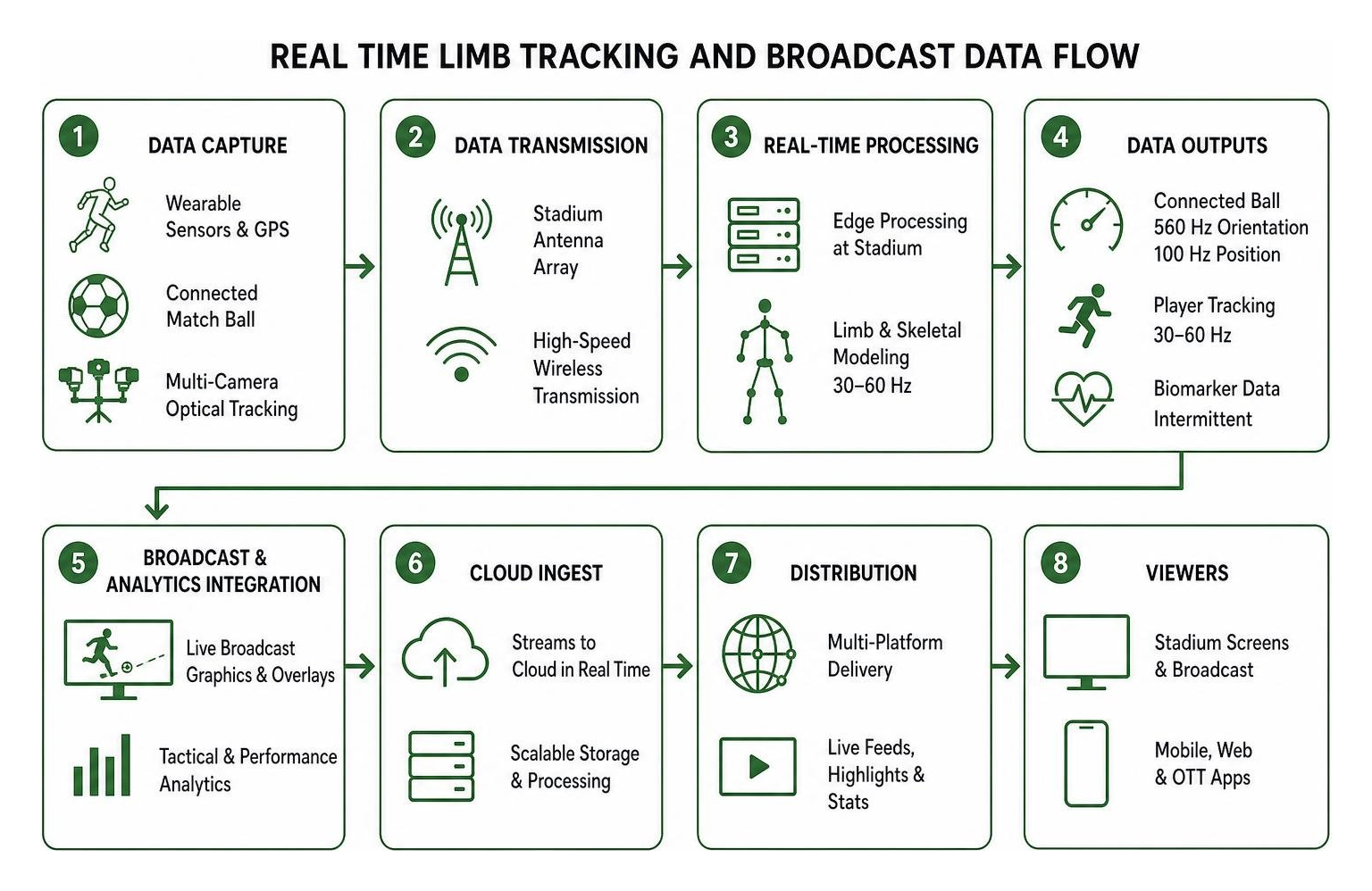
For broadcast and production teams, on-field tracking is a source of player movement data for graphics and match analysis. The practical question is how to bring that data into the live production workflow.

| Tracking Technology | Update Rate | Delay Before Data Is Available | Broadcast and Content Use |
|---|---|---|---|
| Wearable position and motion sensors | 10 Hz – 50 Hz | Sub-second local sync | Player movement data for graphics and analysis |
| Connected Match Balls | 500+ Hz (Orientation) / 100 Hz (Positional) | Millisecond broadcast feeds | Ball tracking for graphics and officiating context |
| Multi-Camera Optical Tracking | 30 Hz – 60 Hz | Real-time pipeline processing | Player position and joint tracking for match analysis and overlays |
| Biological measurement systems | Intermittent testing at the point of care | Daily to weekly lab processing | Performance-team recovery, fatigue, and nutrition data; confirm authorization before any media use |
Hz means updates per second; orientation describes how the ball is turned, while position describes where it is.
Wearable Sensors as a Source of Movement Data
Wearable sensors capture player position and movement. For media teams, the key consideration is how tracking data can support graphics and analysis. Systems like K-Sport Pro real-time load management capture continuous data at 50 updates per second across more than 1,800 clubs and federations, analyzing over 6,000 matches monthly. For broadcast and IT leaders, evaluate how a tracking feed connects to production systems, what permissions govern its use, and whether it arrives in time for live coverage.
Computer Vision, Optical Tracking, and Connected Balls
Sensors now extend directly inside match equipment. Connected ball systems show how hardware and computer vision work in tandem. Pioneering Sports Tracking and Analytics by KINEXON Sports, trusted by more than 500 teams worldwide, equips elite competitions with ultra-fast ball tracking.
During top-flight European play, LaLiga connected ball technology and sensor integration delivers 560 signals per second, combining data about how the ball is turned with 100 updates on its position each second. Stadium antennas process these tracking signals for broadcast graphics and Semi-Automated Offside Technology (SAOT), which helps officials assess offside decisions.
Keep Performance Data Separate from Publishable Content
Not every data feed belongs on screen. Platforms such as Orreco analyze biological measurements and training data for performance teams. Media teams should establish what they are authorized to use before bringing athlete data into graphics or content workflows.
Build permissions and review steps into the production workflow so editors can distinguish approved audience-facing data from sensitive athlete information.
2. Redefining Fan Engagement and Live Broadcast Experiences
Capturing peak athletic performance is only part of the equation. Today’s fans demand instant access to high-impact content across every screen.

With roughly 70% of sports fans using streaming apps, modern professional sports organizations must build fast, agile production workflows to deliver highlights, multi-angle replays, and real-time statistics the second a play happens.
Live Movement Graphics and Match Insights
Live sports broadcasts are getting smarter. Camera-based tracking supplies data about players’ joint positions for live graphics. A clear example is how the USTA and IBM limb-tracking serve analysis used 12 synchronized Hawk-Eye cameras across Arthur Ashe Stadium to track 21 individual joints on every serve.
By analyzing 1.2 billion joints and generating 7 million serve quality metrics processed through IBM’s WatsonX AI platform, broadcasts translate player movement data into clear ratings for viewers at home.
Cloud-Native Ingest and Multi-Platform Content Distribution
To keep digital audiences engaged, production teams need to move camera feeds to digital platforms immediately. Sports video workflows now lean heavily on hybrid cloud pipelines that bypass traditional physical transfer bottlenecks.
- Fast Cloud Ingest: Field cameras send proxy feeds straight into editing suites while games are in play. Production teams can explore modern camera-to-cloud workflows for live sports to see how remote editing speeds up social clip delivery.
- Decentralized Live Post-Production: Distributed creative teams can edit, color-grade, and package highlights simultaneously without sitting in an on-site broadcast truck.
- Multi-Platform Automation: Centralized render engines quickly reformat widescreen video into vertical clips tailored for social feeds, mobile apps, and connected TV networks.
This shift toward next-generation broadcast infrastructure helps franchises operate like modern media studios, keeping remote teams connected without missing a beat.
Immersive AR, VR, and Interactive Streaming Platforms
Broadcasters and venues are turning passive viewing into interactive entertainment. In-stadium mobile apps use augmented reality overlays to let fans point their phones at the field to view player names, real-time skating speeds, and shot trajectories. At home, interactive streaming players feature alternate camera angles, synced fantasy stats, and low-latency data feeds for real-time engagement.
3. Streamlining Business Operations and Media Infrastructure
Behind every highlight reel is a serious media engine. Operating an always-on athletic franchise requires a digital infrastructure that manages massive data volumes without workflow bottlenecks.
Operating modern sports networks and high-density venues means processing petabytes of media across match days, practices, and community events. Athletic programs and modern collegiate athletics departments must upgrade legacy on-premise silos into scalable, accessible media storage systems.
Centralized Media Asset Management for Always-On Franchises
When video libraries hit petabyte scale, finding an unedited clip from five seasons ago shouldn’t feel like searching for a needle in a haystack. Modern Media Asset Management (MAM) systems solve this by automatically indexing video using optical character recognition, which reads text visible in video, along with facial identification and event metadata.
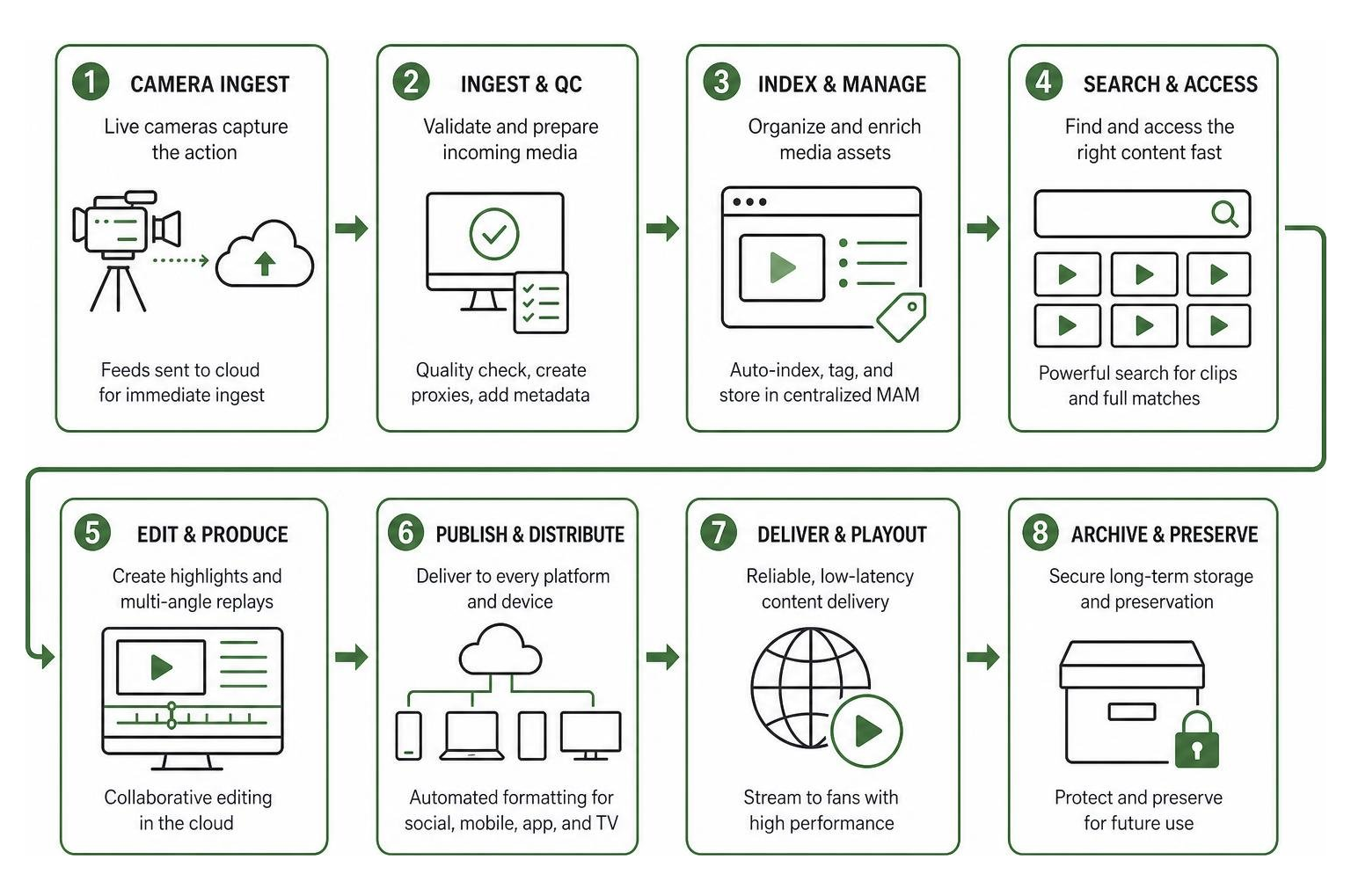
Leading sports enterprises rely on scalable media asset storage and access to keep historic and live video readily available across global production teams. Similarly, optimizing post-production asset pipelines helps creative teams turn raw stadium footage into polished marketing content within minutes.
Smart Stadium Infrastructure and Venue Connectivity
Modern sports facilities rely on fast, dependable connectivity:
- High-Density Wi-Fi 7 Arrays: Keep tens of thousands of mobile devices connected across dense seating bowls without signal loss.
- Biometric and Frictionless Entry: Automated turnstiles speed up stadium entry and eliminate paper ticket bottlenecks.
- Connected Point-of-Sale Systems and Venue Devices: Cashless concourses and smart concession stands shorten halftime lines, keeping fans focused on the game.
- Centralized Production Control Hubs: On-site data centers link venue scoreboards, digital signage, and mobile streams into a single unified control room.
4. Key Challenges, Ethics, and Governance in Sports Technology
With all these new tools entering the sports world, organizations must separate real operational value from short-lived tech hype.
Evaluating Sports Technology: A Multi-Pillar Quality Framework
Before investing in a new tech platform, decision-makers should run the tool through a structured, multi-pillar evaluation process:
- Quality Assurance & Measurement: Does the device deliver verified accuracy, repeatable outputs, and reliable build quality under tough game conditions?
- Established Benefit: Has the tool demonstrated proven validity across sports science and media workflows, or is it merely selling marketing promises?
- Ethics, Security, & Sustainability: Does the platform comply with international data regulations, protect user ownership, and minimize hardware waste?
- User Experience & System Robustness: Is the interface intuitive for coaching staff and media editors, backed by responsive support and training?
- Data Management & Open Interoperability: Can the tool easily export clean data through open application programming interfaces (APIs), which let software systems exchange information, or will it lock your files inside a closed proprietary silo?
Data Permissions and Security in Media Workflows
Bringing athlete data into content production requires clear permissions. Broadcast, production, and IT teams should establish which data they can use, who can access it, and what may be published:
- Which tracking data is approved for graphics, highlights, and sponsor content?
- Do access permissions follow the data into editing, storage, and distribution systems?
- Who reviews sensitive athlete information before publication?
Clear permissions and review steps help media teams use athlete data responsibly without slowing production.
5. Emerging Trends and the Long-Term Industry Horizon
The business of sports technology is accelerating, with the global sports analytics market projected to hit $8.4 billion in 2026. The next wave of innovation will blend automated intelligence, immersive media, and cloud operations.
The Future of Sports Technology: Scalable Cloud Architecture and Emerging Tools
Cloud architecture is fundamentally changing how sports content gets made. Automated AI production tools can monitor multiple camera feeds, generate real-time player packages, and adjust social media clips for vertical mobile formats instantly.
Edge computing—processing data on local computers inside sports venues—can reduce the delay in processing tracking data, helping live broadcast teams bring player data into coverage faster.
Connecting Live Data to Digital Content
For media leaders, the useful question is how emerging tools support live coverage, digital distribution, and the value of existing content:
- Multi-Platform Publishing: Evaluate how automation can prepare the same footage for broadcasts, streaming services, and vertical social clips.
- Tracking Data in Live Coverage: Evaluate how ball and player tracking can support graphics that explain key match moments.
- More Value from the Archive: Make historic footage and behind-the-scenes content easier to find and reuse across fan and sponsor channels.
Frequently Asked Questions
What is sports technology and why is it essential for modern sports organizations?
Sports technology is the ecosystem of digital software, hardware sensors, AI systems, and cloud infrastructure used to improve athletic development, modernize broadcast workflows, and streamline venue operations. It helps organizations protect player health, build faster content production pipelines, and create new commercial opportunities.
How do teams evaluate sports technology before adoption?
Organizations evaluate new tools using a structured quality framework that assesses measurement accuracy, usefulness in real workflows, data security, ease of use, and the ability to exchange data with other systems. Running a multi-pillar review helps teams invest in platforms that integrate smoothly with their existing media and analytics setups.
What should media teams check before using athlete tracking data?
Confirm which data is approved for publication, who may access it, and whether those permissions carry through editing, storage, and distribution. Keep sensitive athlete information out of published content unless its use is clearly authorized.
Conclusion
Sports technology is transforming how elite athletic organizations train, produce content, and build long-term value. Winning in this space requires clear strategic alignment. The real advantage comes from deploying reliable, cloud-native media workflows and practical analytical tools that solve operational bottlenecks, give your staff their time back, and keep your fans coming back for more.
At CHESA, we design, build, and support the end-to-end media infrastructures that power modern sports organizations—from live camera ingest and MAM implementations to scalable cloud storage and archive solutions.
Ready to eliminate production bottlenecks and turn your media operations into a high-performance content engine? Connect with our team today to explore tailored media workflow solutions for professional sports.