Technology Design, Integration & Support for Performing Arts Organizations

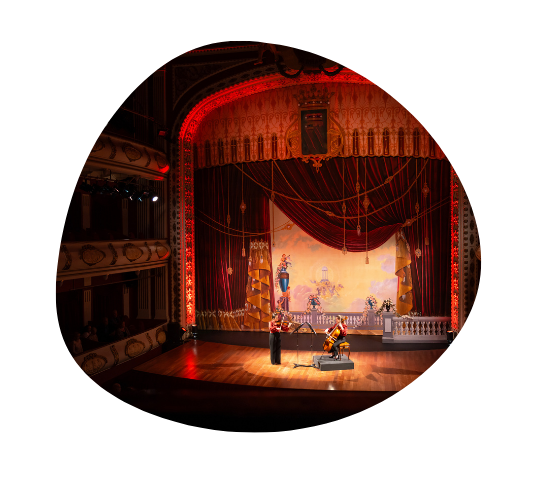
Helping symphonies, opera companies, ballet, theater organizations, and performing arts institutions design, integrate, and support the capture, production, and distribution of live performance content.

What We Do

Broadcast, Media Workflow & Technology Solutions

Performing arts media exists where artistic intent meets technical capture. The institutions building lasting digital programs are the ones whose capture, production, and archive systems were designed for the way performing arts content actually gets used — across seasons, across venues, and across audiences who don’t all show up in person.

CHESA helps performing arts organizations design, integrate, and support the systems required to capture every performance, reach audiences beyond the venue, and preserve the artistic legacy.

Live Performance Capture & Recording Systems

Design and integrate broadcast-grade capture environments for symphonies, operas, ballet, and theater productions, with multi-camera and multi-track audio workflows.

Multi-Venue & Multi-Performance Workflows

Build workflows that coordinate capture, post, and distribution across multiple venues, seasons, and performance series.

Donor, Education & Hybrid Audience Content

Operationalize content production for donor cultivation, education programs, and hybrid in-person/digital audience experiences.

Discovery & Design Before the Build

Document current systems, map artistic and operational requirements, and create a roadmap that respects the performance calendar.

Systems Integration Across Production, Storage & Distribution

Connect capture, editorial, archive, and distribution systems into a workflow that serves both artistic and audience-development missions.

Service Level Agreements with Performance-Aware Support

Keep performance-critical capture and production systems running with response tiers built around the performance calendar.

What CHESA Makes Possible for Performing Arts Organizations

Tangible outcomes our performing arts customers achieve once their media systems are designed, integrated, and supported the right way.

Capture every performance with broadcast-grade quality

Document the artistic work across every concert, opera, and production at the standard the work deserves.

Reach audiences who can’t attend in person

Operate hybrid and digital distribution that serves audiences beyond the venue without compromising artistic intent.
Build donor and education content libraries

Generate consistent content for donor cultivation and education programs from the work the organization is already producing.

Manage content across multiple venues and seasons

Coordinate capture and workflow across resident halls, touring venues, and outdoor amphitheaters with a single coherent platform.

Preserve the artistic legacy

Archive performances at preservation standards, with the metadata and accessibility that supports future scholarship, programming, and licensing.

Built for the Demands of Modern Performing Arts Media

Performing arts media teams are responsible for more than recording concerts. They are managing artistic relationships, donor expectations, education program content, archive growth, multi-venue coordination, hybrid audience experiences, and the institutional politics that come with serving both artists and patrons — often with a small staff supporting a large performance calendar.

CHESA helps performing arts organizations create systems that are:

Performance-Grade

Designed for the audio and video quality that the artistic work requires.

Multi-Venue

Built to coordinate capture, workflow, and archive across resident halls, touring venues, and outdoor performance spaces.

Audience-Inclusive

Engineered to serve in-person, hybrid, digital, donor, and education audiences from the same underlying content.

Archive-Ready

Connected to preservation systems with metadata, provenance, and accessibility that supports the institutional legacy.

Artistically-Sensitive

Structured around the artistic intent, conductor preferences, and creative collaboration that performing arts media production requires.

Design a Media Workflow That Supports Your Mission

CHESA works collaboratively with performing arts organizations to understand how your media operation runs today, where current systems are creating friction, and what your artistic and audience-development missions require going forward.

Whether you are starting with a discovery engagement, planning a capture system upgrade, building a hybrid audience program, modernizing your archive, or establishing an ongoing support strategy, CHESA can help you move forward with clarity.

Services

Common Challenges
We Help Performing Arts Organizations Solve

“We capture every concert but we can’t find anything we’ve recorded.”

CHESA can implement MAM and archive structures with metadata, semantic search, and access workflows so the institutional library becomes a working resource.

“Our donor content production is reactive, not strategic.”

CHESA can build workflows that generate donor-quality content as a byproduct of the work the organization is already producing.

“Hybrid audiences expect broadcast quality, not webcam quality.”

CHESA can design capture and streaming infrastructure that serves digital and hybrid audiences at the production standard the work deserves.

“We manage three venues with three different workflows.”

CHESA can unify capture, editorial, and archive workflows across resident halls, touring venues, and outdoor amphitheaters.

“Our archive is on hard drives in a closet.”

CHESA can design preservation-grade archive systems with immutable storage, recoverable formats, and the metadata performing arts institutions require.

“Our IT team isn’t audio-engineering trained.”

CHESA bridges performing arts production and institutional IT, with the audio, video, and broadcast standards fluency performing arts media requires.

Take the First Step – Let’s Talk!

Fill out the form and a CHESA specialist will follow up to learn more about your goals, challenges, and current technology environment.

Share this...
Share on linkedin
Linkedin
Share on facebook
Facebook
Share on twitter
Twitter
Share on email
Email